
Unlock your business transformation with our smart IT infrastructure services and solutions.
Ensure your unique data and process requirements are being met with IT solutions built on deep domain experience and expertise.
At Coretelligent, we’re redefining the essence of IT services to emphasize true partnership and business alignment.
Get our perspective on the connections between technology and business and how they affect you.
Financial services firms need cybersecurity that protects sensitive information, supports uptime, and gives leadership confidence before an incident, audit, DDQ, or insurance review creates pressure.
Coretelligent delivers managed cybersecurity services for financial firms that need stronger threat detection, response, identity security, cloud protection, vulnerability management, and evidence-ready reporting.
Security tools, alerts, and policies do not reduce risk unless someone can monitor, prioritize, respond, and prove what changed. Coretelligent helps financial firms turn cybersecurity into an operating discipline across users, endpoints, cloud systems, vendors, and critical workflows.
Monitor identity, endpoints, email, cloud, and infrastructure so threats can be triaged and contained faster.
Harden access, devices, Microsoft 365, remote work, and critical systems around how your firm operates.
Support DDQs, audits, insurance reviews, and leadership reporting with clearer controls and evidence.
Strong cybersecurity is not only prevention. It connects visibility, control, response, and evidence so leaders can answer what happened, what was affected, and what is being done.
Know your users, devices, apps, privileged accounts, vendors, alerts, vulnerabilities, and data pathways.
Strengthen MFA, access policies, endpoint protection, email security, patching, backups, and segmentation.
Triage threats, coordinate vendors, preserve evidence, and escalate quickly to key stakeholders.
Maintain dashboards, timelines, records, and reporting for audits, DDQs, regulators, insurers, and investors.
Financial firms should start with controls that reduce the most common paths to disruption: identity security, MFA, conditional access, endpoint protection, email security, vulnerability management, patching, cloud monitoring, backup protection, vendor access controls, and incident response planning.
The goal is not to buy more tools. The goal is to build a cybersecurity program that can prevent, detect, respond, recover, and produce evidence.
Security tools only help when alerts are owned, tuned, reviewed, escalated, and acted on.
Financial firms need visibility across endpoints, identity, email, cloud platforms, remote access, infrastructure, and critical third-party connections.
Coretelligent helps firms move from passive tooling to active cybersecurity operations.
Many cybersecurity gaps begin with everyday systems: email, Teams, SharePoint, OneDrive, Azure, remote access, endpoints, privileged accounts, and user permissions.
These environments need continuous oversight around access, configuration, logging, data exposure, device security, and account compromise.
Cybersecurity for financial services should include the collaboration and cloud systems employees use every day.
Readiness means your firm knows who leads, who investigates, who contacts vendors, who preserves evidence, who informs leadership, and when legal, compliance, insurance, or communications partners need to be involved.
A practical incident response plan should connect cybersecurity, IT, compliance, operations, vendors, backups, communications, and executive decision-making.
A strong cybersecurity program should produce evidence, not just intentions.
Firms may need to show access controls, monitoring coverage, vulnerability remediation, backup readiness, incident response procedures, vendor oversight, user training, and security reporting.
Coretelligent helps financial firms strengthen the documentation behind cybersecurity controls so diligence and review cycles are easier to support.
Cybersecurity does not stop at internal systems. MSPs, MSSPs, SaaS platforms, cloud vendors, data providers, AI tools, and outsourced business services can all affect security and continuity.
Financial firms should connect cybersecurity with vendor access, escalation paths, business continuity, backup readiness, incident response, and recovery planning.
Featured Resource
Identify cybersecurity gaps, clarify priorities, and see where your firm may need stronger protection, response, and oversight.
Strengthen controls around confidential information, data, deal materials, and communications.
Improve MFA, email protection, access policies, user awareness, and suspicious activity monitoring.
Secure devices, collaboration tools, remote access, cloud systems, and daily-use platforms.
Detect suspicious activity, investigate alerts, escalate threats, and coordinate containment before issues become firmwide disruption.
Prioritize remediation around the systems, applications, devices, and exposures that create the greatest business risk.
Maintain stronger documentation around controls, monitoring, incident response, backup readiness, and governance ownership.
Checklist
Pressure-test governance, detection, escalation, communications, legal, vendors, and recovery.
Checklist
Use a 10-step executive checklist to assess ransomware readiness.
Checklist
Review planning, testing, vendor readiness, secure access, and recovery procedures.
Product Sheet
See how CoreArmor supports around-the-clock protection, response, and resilience.
Checklist
Clarify how IT, security, vendors, communications, and leadership should respond when an incident threatens systems, data, or client trust.
Tool
Estimate how downtime, disruption, and recovery delays affect financial services firms.
See how Coretelligent supports the cybersecurity priorities, risks, and operational pressures specific to your role.
Chief Financial Officer
Quantify cyber risk, reduce downtime exposure, support cyber insurance conversations, and connect security investments to business impact.
Chief Operating Officer
Reduce disruption, clarify escalation paths, improve incident readiness, and keep critical workflows moving during cybersecurity events.
Chief Compliance Officer
Strengthen evidence for policy execution, incident response, vendor oversight, access controls, and regulatory readiness.
CIO, CTO
Align identity, endpoints, cloud, infrastructure, monitoring, patching, backup, and vendor dependencies into a stronger security operating model.
CISO
Extend cybersecurity operations with threat detection, response, hardening, vulnerability management, reporting, and executive-level visibility.
Department Heads
Protect the tools, data, and workflows teams need to serve clients, collaborate securely, and keep sensitive work moving.
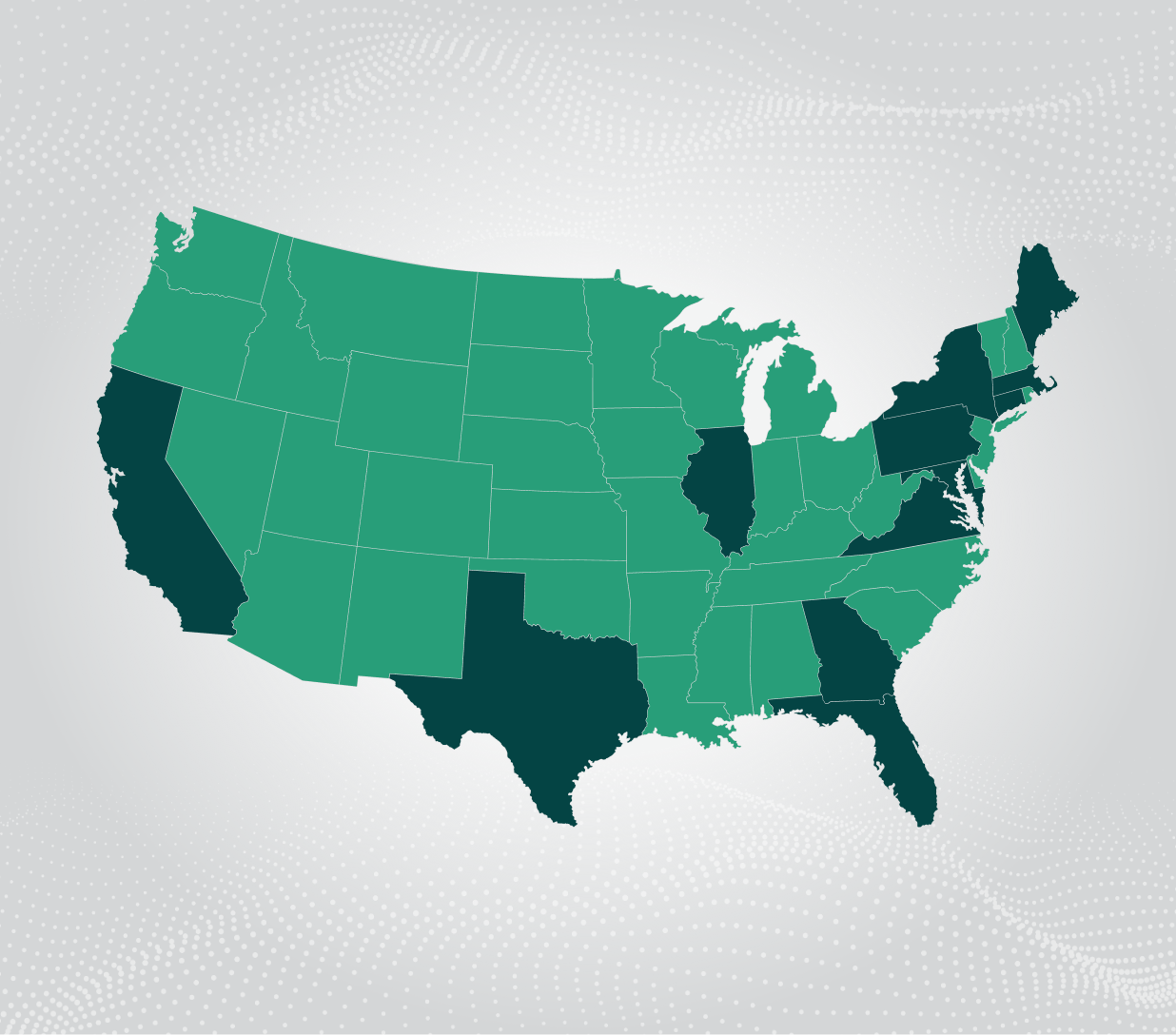
Coretelligent supports financial services firms across distributed, hybrid, remote, and multi-office environments.
Whether your firm needs onsite support, remote cybersecurity expertise, executive assistance, or coverage across multiple locations, we can help.
Coretelligent helps financial services firms improve threat detection, harden critical systems, prepare for incidents, and build the evidence needed for audits, DDQs, insurance reviews, and leadership confidence.